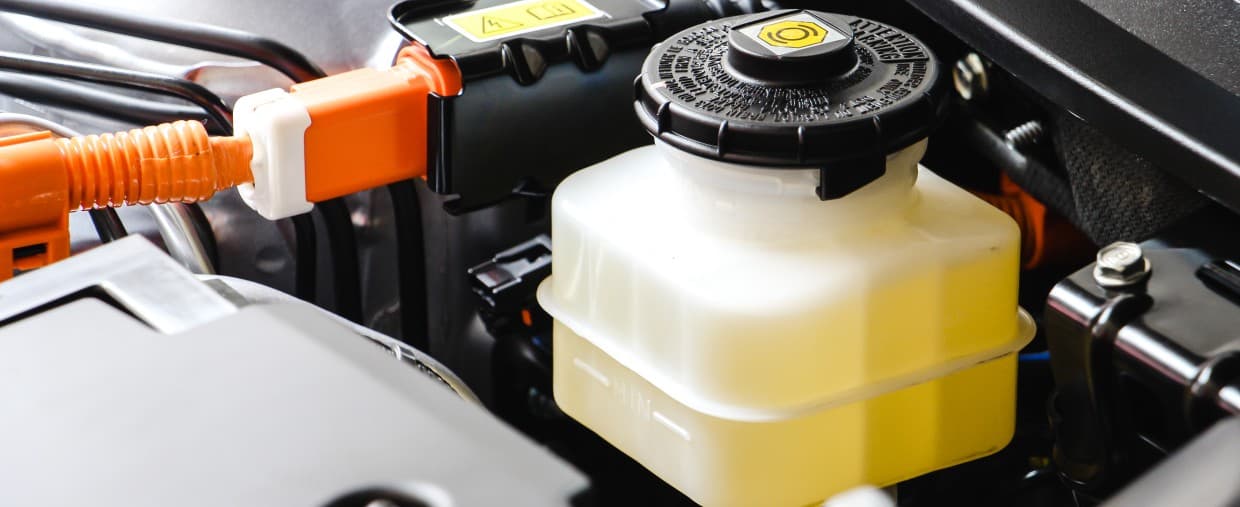


What is Brake Fluid and Why It Matters
Brake fluid is the hydraulic liquid that transfers the force from your foot pressing the brake pedal to the brake calipers or wheel cylinders that slow your vehicle. Without good-condition fluid, your brakes won’t respond reliably, putting your safety at risk.
Suggested image: Diagram showing brake pedal, master cylinder, brake lines, and calipers.
Why Brake Fluid Needs Changing
Over time, brake fluid can degrade due to:
- Moisture absorption – most brake fluids are hygroscopic, meaning they absorb water from the air, lowering the boiling point and causing brake fade under heavy braking.
- Contamination – dust, rubber particles, and corrosion can accumulate, reducing braking efficiency.
- Corrosion and internal damage – moisture can corrode lines and components, increasing repair costs.
- Reduced performance under high demand – heavy braking in traffic, hills, or with heavy loads puts extra stress on old fluid.
Signs You Need a Brake Fluid Change
Watch for these warning signs:
- Spongy or soft brake pedal.
- Brake warning or ABS lights illuminated.
- Dirty or dark brake fluid in the reservoir.
- Significant drop in brake fluid level without visible leaks.
- Frequent heavy braking or use in harsh conditions.
Recommended Brake Fluid Change Interval
- Most vehicles: every 2 years or 30,000–40,000 km.
- Vehicles under heavy loads, hilly terrain, or frequent stop-and-go traffic: consider annual or every 20,000–30,000 km.
In Kenya’s driving conditions — variable road quality, inclines, and heavy traffic — proactive brake fluid maintenance is especially important.


