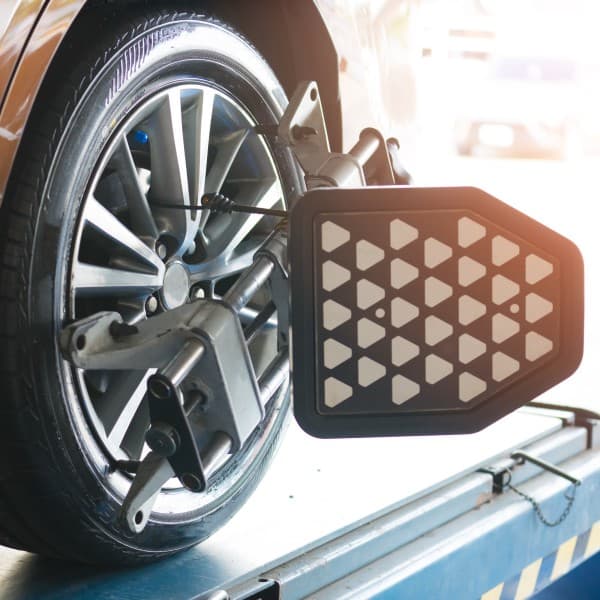


Regular wheel alignment checks are recommended at least every 10,000 kilometres or after any major service or repair to the vehicle's suspension or steering system.
In this guide, we explain:
- What wheel alignment is
- Signs your car needs alignment
- Causes of misalignment
- How often to do alignment
- Wheel alignment cost
- Where to get professional alignment
What Is Wheel Alignment?
Wheel alignment, also known as car alignment, is the process of adjusting your vehicle's wheels so they are set to the manufacturer’s correct angles ensuring proper contact with the road.
When your alignment is correct:
- Your car drives straight
- Your tyres wear evenly
- Your steering is stable and responsive
When it’s off, you’ll notice poor handling and faster tyre wear.
Before starting a wheel alignment, a pre-alignment inspection should include checking tyre pressure and inspecting suspension components for wear.
Why Wheel Alignment Is Important
Driving conditions make alignment even more critical:
- Frequent potholes (especially during rainy seasons)
- Uneven road surfaces
- Speed bumps and rough terrain
- Heavy urban traffic
These factors can easily knock your wheels out of alignment, leading to tyre wear issues.
Without proper alignment, you risk:
- Uneven tyre wear
- Premature tire wear
- Excessive wear
- Premature tyre replacement
- Poor fuel economy
- Reduced road safety
- Damage to suspension components
Signs Your Car Needs Wheel Alignment
Common symptoms of bad alignment include vehicle pulling to one side, an off-center steering wheel, uneven tire wear, vibrating steering wheel, and squealing tires during turns. If you notice any of these, your car may have bad alignment.
Here’s what to look for:
- Car pulls to one side while driving straight
- Off center steering wheel even when driving straight
- Uneven or rapid tyre wear
- Steering wheel vibrates or shakes
- Squealing tires during turns
1. Car Pulling to One Side
If your car drifts left or right on a straight road, alignment is likely off.
2. Steering Wheel Not Straight
Your steering wheel should be centred when driving straight.
3. Uneven Tyre Wear
Check your tyres—if one side is more worn, alignment is a likely cause.
4. Vibrating Steering Wheel
This could indicate alignment or balancing issues.
5. Noise When Turning
Squealing tyres when cornering can signal misalignment.
What Causes Wheel Misalignment?
Common causes include:
- Hitting potholes or curbs
- Driving on rough rural or urban roads
- Worn suspension or steering parts, such as control arms
- Replacing steering components
- Installing new suspension components
- General wear and tear over time
Front wheel drive cars are particularly susceptible to alignment issues due to their design. Worn control arms can also lead to misalignment. Misalignment can negatively impact handling characteristics, causing issues like pulling, vibration, or irregular tyre wear.
How Often Should You Do Wheel Alignment?
For most drivers, we recommend:
- Every 10,000 km or once a year
- Immediately after hitting a pothole or curb
- After replacing suspension or steering parts
If you drive on upcountry roads with rough terrain, consider checking alignment more frequently.
Wheel Alignment vs Wheel Balancing
- Wheel Alignment → Adjusts wheel angles
- Wheel Balancing → Balances the weight distribution on tyres
Both are important and they solve different problems.
Types of Wheel Alignment
Toe Alignment
Toe alignment controls whether your front tires point inward (toe-in) or outward (toe-out) when viewed from above. Proper toe angle is crucial for even tire wear and optimal handling. To check the front toe, use a tape measure to take two measurements: one at the front (front reading) and one at the rear of the front tires (front and rear). Make sure the tape measure is level with the ground for accuracy. The difference between these two measurements determines your toe setting.
For most vehicles, the front side of the tires should be about 1/8th of an inch narrower than the rear side—this slight toe-in helps with stability and tire longevity. If the front reading is wider than the rear, you have toe-out, which can cause poor handling and increased tire wear.
To adjust the toe angle, locate the tie rods and tie rod adjuster sleeves connected to the steering linkage on the front axle. Loosen the jam nuts on the tie rods, then turn the adjuster sleeves to move the front wheels in or out as needed. Adjust the tie rods the same amount on both sides to maintain proper alignment. After each adjustment, re-measure the front and rear distances with the tape measure to confirm the toe is set correctly.
Once the desired toe setting is achieved, tighten the jam nuts to lock the tie rod adjusters in place. Properly adjusting toe on the front wheels improves handling, steering response, and extends tire life. If you're unsure or need precise alignment, consider having a professional perform the adjustment.
Camber Alignment
Camber controls the vertical angle of the tires when viewed from the front of the vehicle. If the top of the tire tilts outward, this is called positive camber; if it tilts inward, it is negative camber. Too much tilt in either direction can cause uneven tire wear and poor grip, affecting vehicle stability and handling.
To check camber at home, first park your car on a level surface or level ground to ensure accurate measurements. Use a straight edge placed vertically against the wheel, making sure it contacts the wheel lips evenly. Then, use an angle finder to measure the angle between the straight edge and the wheel. This will help you determine if your wheels have excessive positive or negative camber.
Camber adjustments can be made on some vehicles to correct improper tilt and improve handling. However, most vehicles do not allow rear camber adjustment from the factory, so adjusting rear camber typically requires professional expertise or aftermarket components. It's important to check camber on both the front and rear wheels if possible, as proper alignment of all wheels is crucial for optimal tire wear and vehicle performance.
Caster Angle
Affects steering stability and return to centre, as caster angle is determined by the forward or backward tilt of the steering axis.
Wheel Alignment Cost in Kenya
Prices vary depending on:
- Vehicle type
- Whether it’s 2-wheel or 4-wheel alignment (aligning all four wheels ensures proper handling and stability)
- Equipment used (manual vs computerised; alignment shops often use specialized equipment such as alignment machines, 3D imaging systems, and alignment racks to achieve precise results)
Professional alignment services at an alignment shop may cost more due to the use of this specialized equipment and the expertise required.
Tip: Cheap alignment can cost you more in tyres later—always choose a professional service.
DIY vs Professional Wheel Alignment
While some basic checks can be done anywhere, the alignment process for modern vehicles requires:
- Computerised alignment machines
- Laser-guided precision
- Professional calibration
- Precise adjustments to wheel angles such as camber, toe, and caster
For safety and accuracy, always go to a trusted alignment centre. After any DIY or professional alignment, perform a test drive to verify proper handling and steering.
Benefits of Proper Wheel Alignment
Regular alignment helps you:
- Extend tyre life
- Improve fuel efficiency
- Drive safely and comfortably
- Protect suspension components
- Maintain vehicle value
Final Thoughts
Wheel alignment is one of the most important—and often overlooked—services for your car.
If your car:
- Pulls to one side
- Has uneven tyre wear
- Feels unstable
Don’t wait. A simple alignment check can save you thousands in tyre costs and keep you safe on the road.
AutoXpress Recommendation
At AutoXpress, we combine precision wheel alignment with full tyre and suspension checks—so you get complete peace of mind.
Fast. Friendly. Professional. The Trusted Car Doctor.


